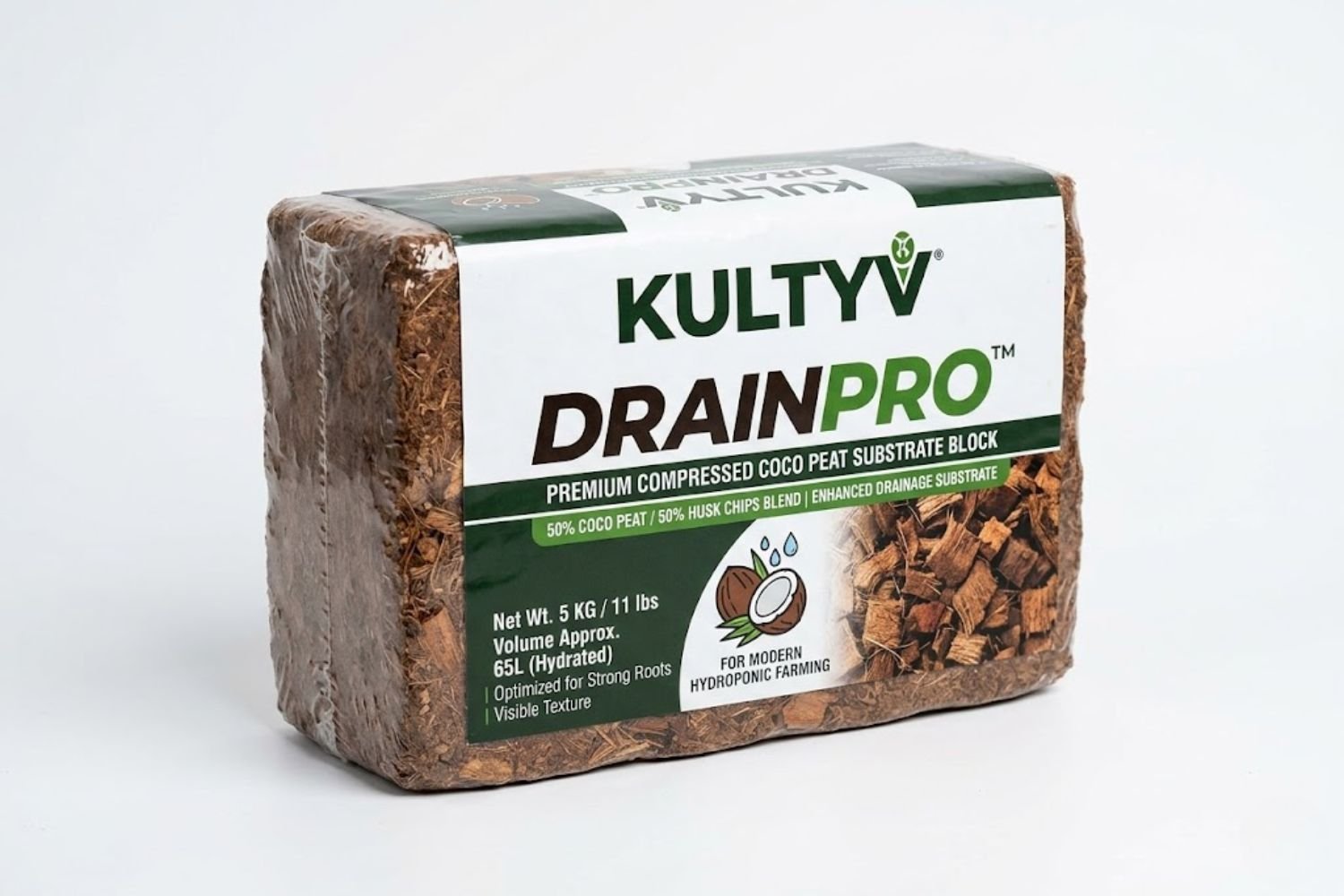
Kultyv provides premium solutions for Blueberry Farming India with advanced coco peat substrates engineered for hydroponic cultivation, greenhouse farming, and high-yield berry production. Our crop-specific growing media supports healthier roots, balanced moisture retention, improved aeration, and consistent crop performance for commercial blueberry growers.
Blueberry cultivation in India is rapidly gaining momentum as a premium commercial crop. Driven by growing domestic health awareness and rising import costs, farmers across cooler hill regions and polyhouse operations are increasingly investing in commercial blueberry production.
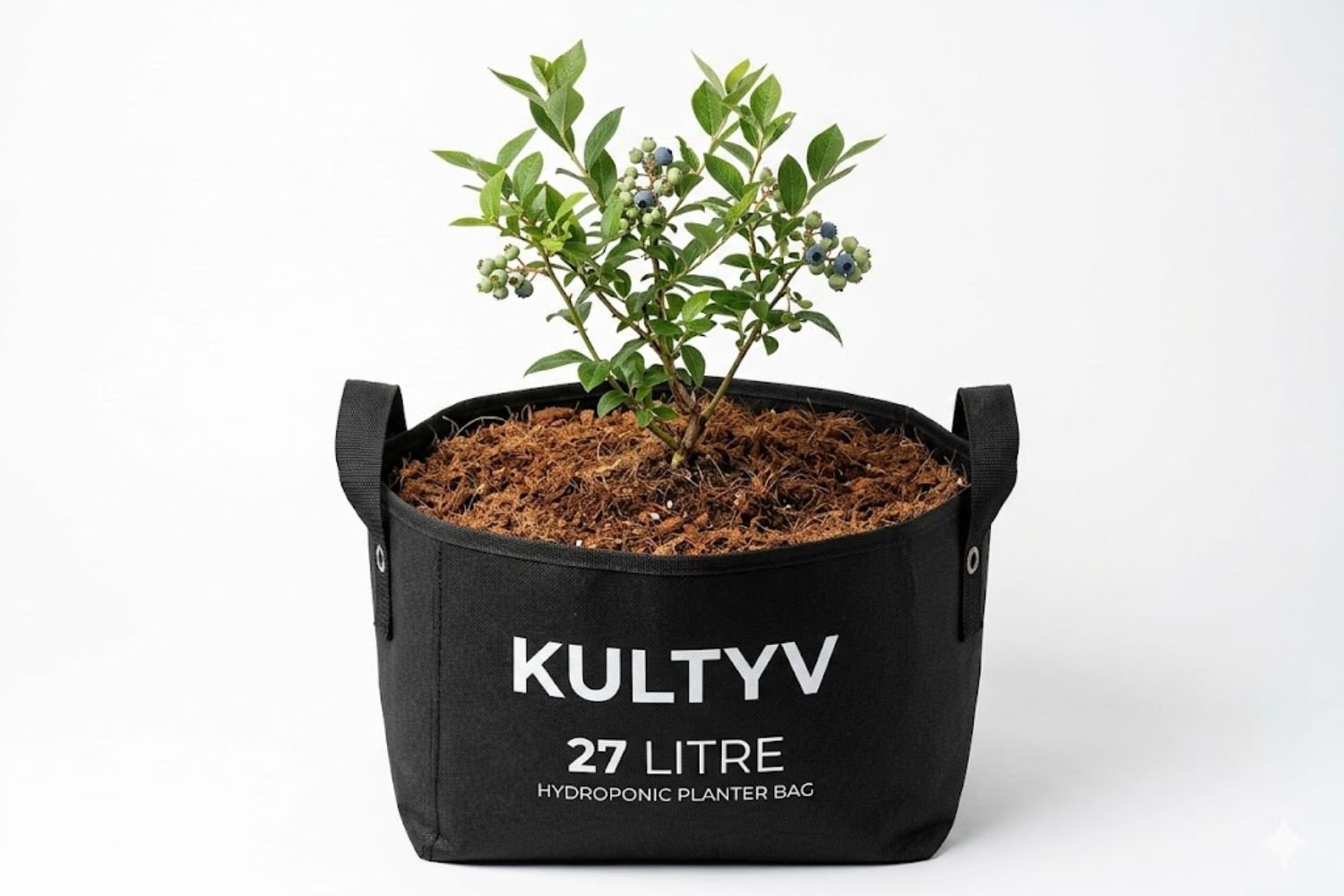
Unlike most Indian fruits, blueberry requires an ericaceous (acidic) root zone with excellent drainage and aeration. The hydroponic open-top planter bag system has emerged as the most practical solution — giving growers precise control over pH, EC, and substrate structure.
Success in commercial blueberry farming depends almost entirely on getting the root zone environment right from day one. The substrate is not a secondary consideration — it is the foundation of every productive season.
Himachal Pradesh, Jammu & Kashmir, Uttarakhand — cooler climates suited to low-chill varieties
Season: Year-round under polyhouse | Harvest: varies by variety
Maharashtra (Pune, Nashik), Karnataka — using zero-chill varieties like Biloxi, Emerald under protected cultivation
Season: Year-round polyhouse production | Varieties: Biloxi, Emerald, Misty, Robin Blue
Blueberry roots are fine and fibrous, requiring exceptional air-filled porosity in the root zone. Dense or compacted substrates suffocate these roots — leading to poor nutrient uptake, stunted growth, and premature plant decline.
Blueberry is among the most salt-sensitive crops in commercial farming. Any elevated EC in the substrate can cause immediate root stress. Triple washed, consistently low EC substrate is non-negotiable for blueberry production.
Blueberry is a perennial crop with a production life of 8–15 years. The substrate must maintain its physical structure — AFP and WHC — across multiple seasons without compaction, ensuring consistent root zone performance year after year.
Blueberry requires a substrate pH of 4.5–5.5 — significantly lower than most crops. Generic coco peat substrates are typically pH 5.5–6.5, which is too alkaline for blueberry. Growing in an incorrect pH range locks out key nutrients and causes iron and manganese deficiencies, leading to yellowing leaves and poor fruit set.
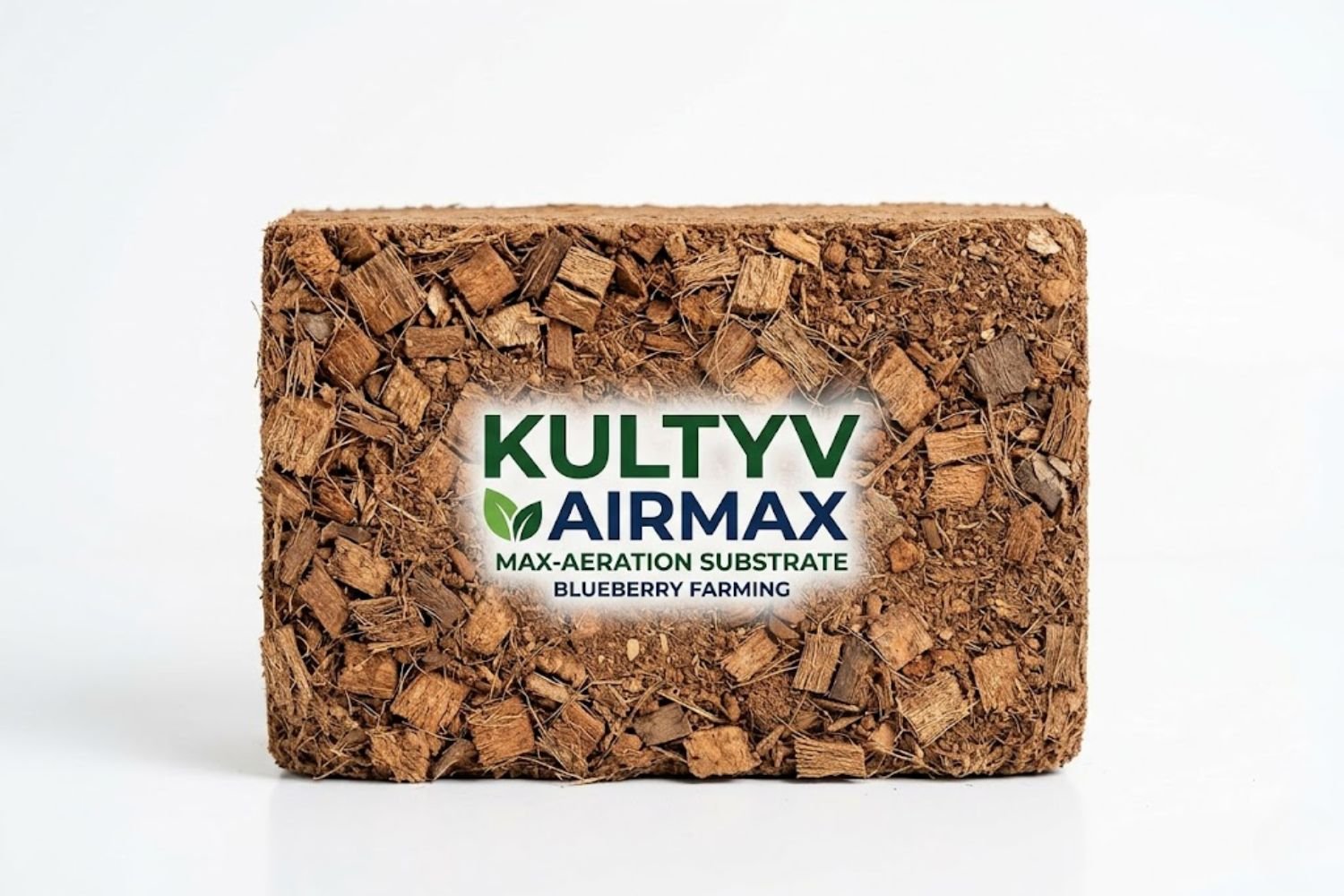
Kultyv AirMax and DrainPro provide a neutral starting point (pH 5.5–6.5) that can be precisely adjusted downward using pH-down solution during rehydration. The stable physical structure of Kultyv substrate maintains the adjusted pH more consistently than generic or variable-quality coco peat.
Blueberry roots are extremely sensitive to waterlogged conditions. In dense substrates with poor air-filled porosity, excess moisture creates anaerobic conditions in the root zone — leading to Phytophthora root rot, one of the most destructive diseases in blueberry production. Once established, root rot is very difficult to reverse.
Kultyv AirMax's 70% husk chips content creates a highly porous substrate structure with maximum AFP — ensuring rapid drainage after each irrigation cycle. This prevents water from pooling around roots and virtually eliminates waterlogging risk when used with appropriate drip irrigation scheduling.
Blueberry is a long-term perennial crop. Over multiple seasons, low-quality substrates compact, lose their structure, and develop anaerobic zones that compromise root health. Replacing substrate frequently is expensive and disruptive to established plants.
Kultyv's husk chips component provides long-term structural stability that resists compaction over multiple seasons. The consistent AFP and WHC profile of AirMax is maintained season after season — supporting healthy root development throughout the long productive life of a blueberry plant.