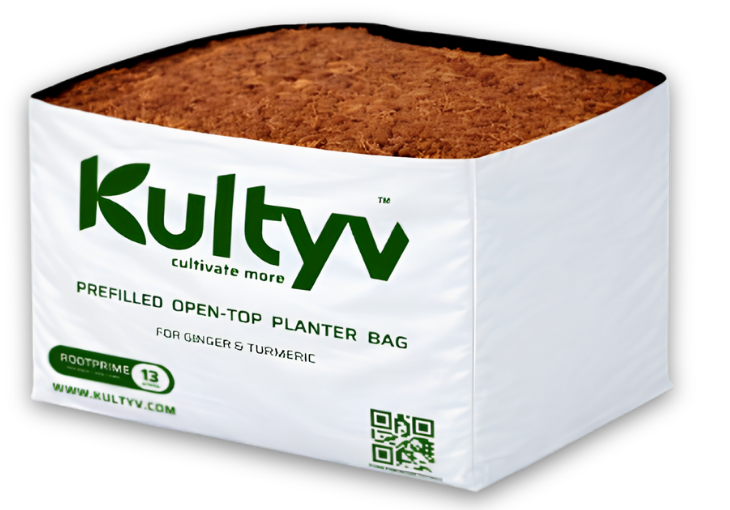
Disease-free root zone. Clean sterile medium. The single biggest advantage of coco peat substrate for ginger — eliminating soil-borne diseases that devastate conventional crops.
India is the world’s largest producer of ginger, with cultivation concentrated in Kerala, Karnataka, Meghalaya, Andhra Pradesh, Uttarakhand, and Himachal Pradesh. Despite this scale, conventional ginger farming is plagued by soil-borne diseases — particularly rhizome rot caused by Pythium and Fusarium — that can devastate entire crops.
Soilless ginger cultivation using coco peat substrate in open-top planter bags is a rapidly growing alternative. It eliminates the soil as a source of disease inoculum, provides a sterile, controlled root zone, and allows growers to produce ginger in regions and seasons where traditional cultivation is not possible.
The planter bag system with coco peat substrate gives growers complete control over rhizome development conditions — moisture, drainage, EC, and pH — resulting in cleaner rhizomes, lower disease losses, and more predictable yields.
Kerala, Karnataka, Meghalaya, Andhra Pradesh, Orissa — major conventional ginger producing states
Traditional season: April–May planting | Harvest: November–December | 8–9 month cycle
Maharashtra, Tamil Nadu, Karnataka, Telangana — growing soilless planter bag adoption for disease control
Soilless system: Year-round potential | Advantage: Disease elimination, controlled conditions
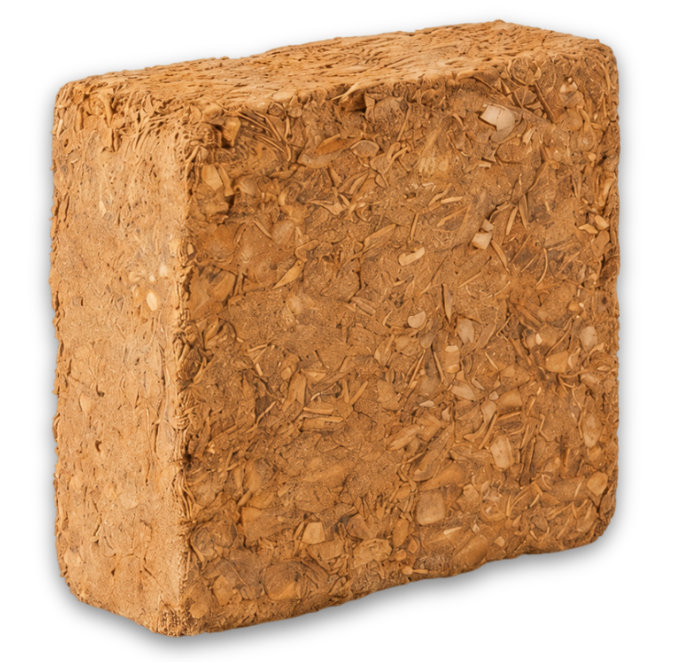
70% Coco Peat + 30% Husk Chips — Balanced Drainage (Semi Washed | EC 1.0–1.5 mS/cm)
Pythium rhizome rot and bacterial wilt (Ralstonia solanacearum) are the most destructive diseases in Indian ginger production. Once established in the soil, these pathogens persist for years — infecting every subsequent crop planted in the same field. Conventional chemical treatment is expensive and only partially effective.
Kultyv coco peat substrate is sterile — completely free from the soil-borne pathogens that cause rhizome rot. By removing soil from the equation entirely, planter bag cultivation eliminates the primary infection pathway. Healthy, disease-free rhizomes and a clean substrate means disease losses are drastically reduced.
Traditional ginger in open fields is highly vulnerable to waterlogging during heavy monsoon rains. Even a few days of saturated soil can cause widespread rhizome rot and total crop failure. This seasonal risk makes conventional ginger farming a high-stakes operation in many Indian states.
Ginger in planter bags with Kultyv substrate is elevated above soil level — naturally protected from field waterlogging. RootPrime's drainage structure and the planter bag's drainage holes ensure excess water exits the root zone quickly — even during heavy rainfall events.
In conventional soil cultivation, rhizome size, shape, and quality varies significantly across a field due to soil variability, uneven moisture distribution, and localised disease pressure. This inconsistency reduces marketable yield and lowers the average sale price the grower receives.
Kultyv coco peat substrate provides a uniform, consistent growing environment across every planter bag. Each rhizome develops in identical conditions — leading to more consistent size, shape, and quality across the harvest. Uniform produce commands better prices and simpler grading.