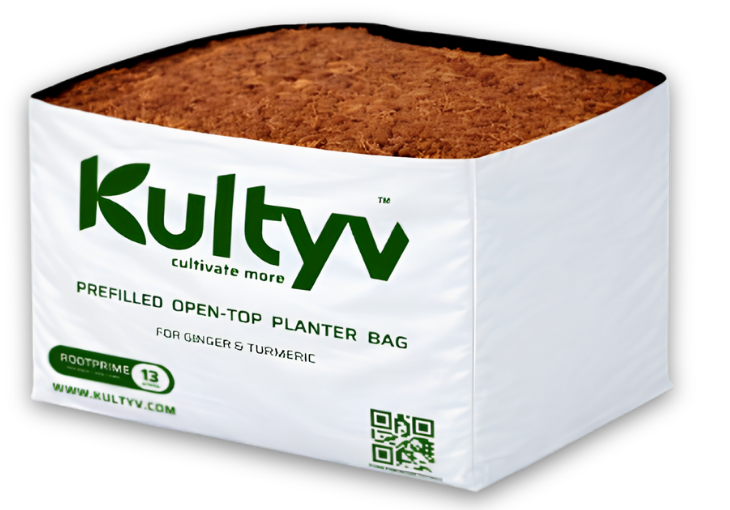
Sterile growing medium. Consistent rhizome development. Soilless turmeric cultivation in coco peat substrate delivers disease-free crops and higher curcumin content.
India produces over 80% of the world’s turmeric, with major cultivation in Andhra Pradesh, Telangana, Tamil Nadu, Karnataka, Maharashtra, and Orissa. Despite this dominance, Indian turmeric farmers face persistent challenges — primarily soil-borne diseases, variable rhizome quality, and inconsistent curcumin content.
Soilless turmeric cultivation in coco peat planter bags is gaining significant traction among forward-thinking Indian farmers. Pioneered in India by innovators like C.V. Prakash, the system has demonstrated yields of 5–10 kg per plant in controlled conditions — dramatically higher than conventional soil cultivation averages.
The coco peat planter bag system gives turmeric growers complete control over the rhizome development environment. Clean substrate, precise nutrition, and disease-free growing conditions translate directly to higher yields, better rhizome quality, and measurably higher curcumin content.
Andhra Pradesh, Telangana, Tamil Nadu, Karnataka, Orissa, Maharashtra — India’s major turmeric growing states
Traditional: Plant April–May | Harvest: December–February | 8–9 month cycle
Karnataka (Tumkur), Tamil Nadu, Maharashtra, Telangana — growing soilless planter bag adoption for quality improvement
Soilless advantage: 5–10 kg/plant yield potential | Higher curcumin content | Disease elimination
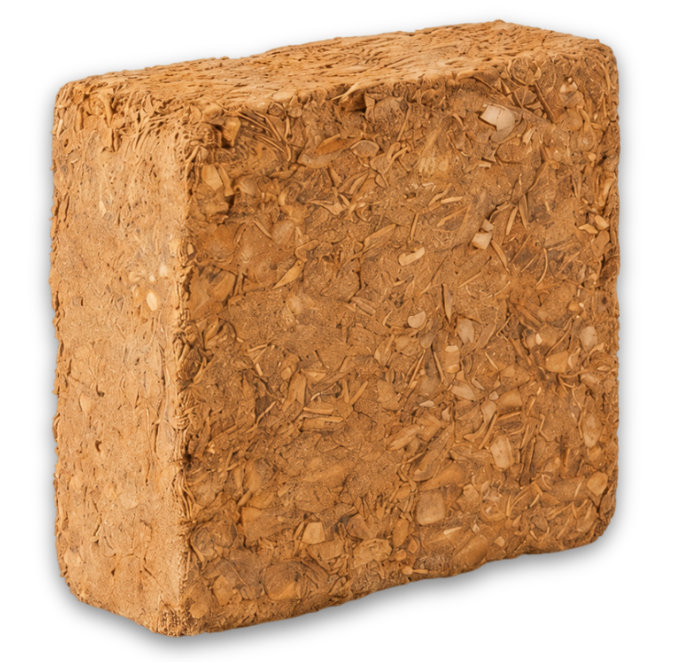
70% Coco Peat + 30% Husk Chips — Balanced Drainage (Semi Washed | EC 1.0–1.5 mS/cm)
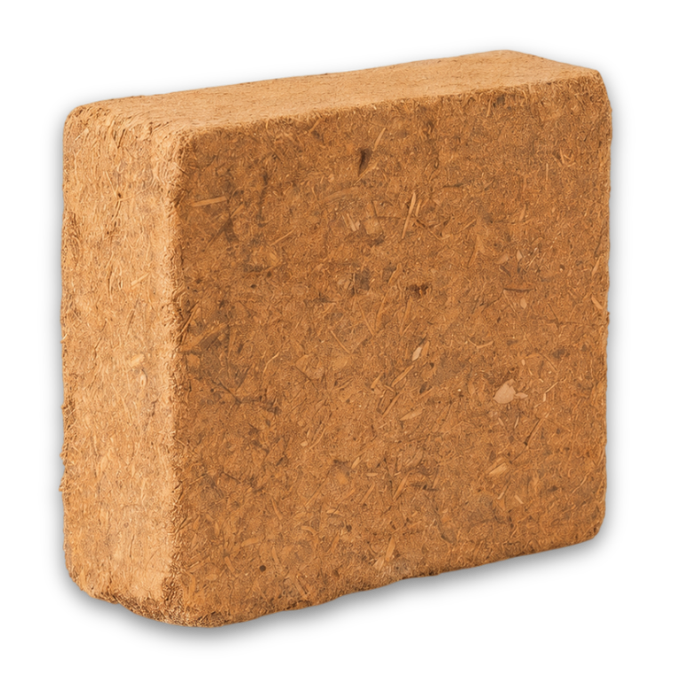
Pythium rhizome rot, Fusarium wilt, and bacterial diseases are endemic in Indian turmeric-growing soils. These pathogens persist in the soil for years, infecting every crop planted in affected fields. Chemical treatments provide only partial control and add significant input costs to the farming operation.
Kultyv coco peat substrate is completely sterile — free from soil-borne pathogens. Every planter bag filled with Kultyv substrate provides a clean, disease-free environment for rhizome development. Removing soil from the growing system breaks the disease cycle entirely — the most effective and economical solution to turmeric's biggest production challenge.
Market and export quality for turmeric is measured by curcumin content. In conventional soil farming, curcumin levels are highly variable — affected by soil quality, disease pressure, moisture inconsistency, and nutrient availability. Low curcumin content reduces the value the farmer receives for the crop.
Soilless cultivation in Kultyv coco peat substrate, combined with precise nutrient management, creates controlled conditions where curcumin accumulation is maximised. A disease-free, nutritionally consistent root zone — without the variability of soil — is the foundation for producing high-curcumin turmeric reliably across every growing cycle.
In conventional turmeric farming, rhizome size varies significantly across a field. Uneven soil structure, variable moisture, and localised disease pressure produce inconsistent rhizomes — increasing grading costs and reducing the proportion of marketable-grade produce per harvest.
Kultyv coco peat in planter bags provides identical growing conditions in every bag. Each plant receives the same substrate structure, moisture availability, and drainage — resulting in more uniform primary and secondary rhizome development. Consistent quality means simpler grading, better marketable yield, and stronger pricing.