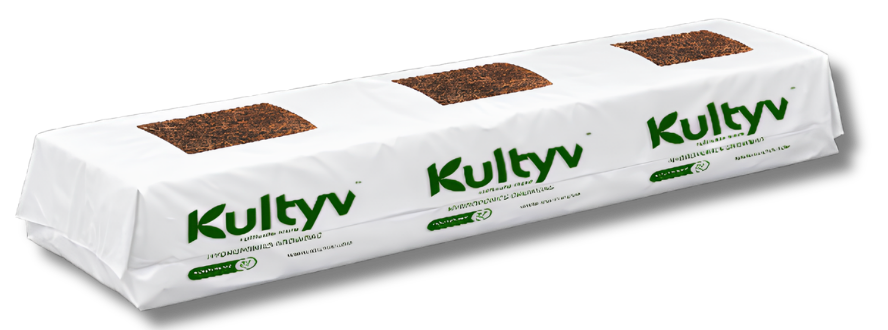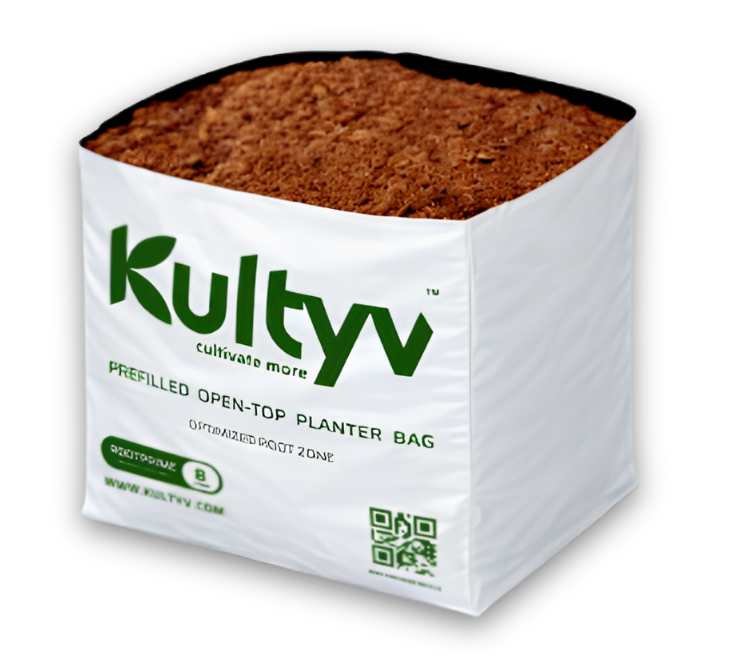
Fast drainage. Consistent aeration. Built for the high irrigation frequency and rapid root growth demands of commercial cucumber production.
Cucumber is one of the most widely grown hydroponic crops in India and a staple of commercial polyhouse farming. With a short crop cycle of 3–4 months and the ability to produce two to three rotations per year, cucumber offers excellent returns per square metre for commercial growers.
The hydroponic growbag system using coco peat substrate is the dominant production method for commercial cucumber in India. It enables precise control over root zone moisture, EC, and drainage — all critical factors for the fast-growing, high-yield cucumber plant.
Cucumber has one of the highest irrigation frequencies of any commercial crop. The substrate must handle repeated wet-dry cycles without compacting, maintaining consistent drainage and aeration throughout each short crop cycle.
Maharashtra (Nashik, Pune), Gujarat — major commercial polyhouse cucumber production regions
Crop cycle: 3–4 months | 2–3 rotations per year | Year-round under polyhouse
Karnataka, Andhra Pradesh, Haryana, Rajasthan — growing polyhouse cucumber adoption
System: Drip growbag | Yield: 100–150 tonnes/acre/year potential
Cucumber is irrigated frequently — sometimes multiple times daily in peak summer. The substrate must drain rapidly after each irrigation event to prevent waterlogging. Slow-draining substrates create anaerobic conditions that cause root die-back and dramatically reduce yield.
Cucumber plants fill a growbag with roots rapidly. A substrate with consistent physical structure provides the space and aeration roots need to expand freely — directly supporting the vigorous vegetative growth that drives high cucumber yields.
Commercial cucumber production runs multiple crop cycles per year. Each substrate fill must deliver the same AFP and WHC performance — ensuring that the first rotation and the third rotation produce consistent results without quality variation.
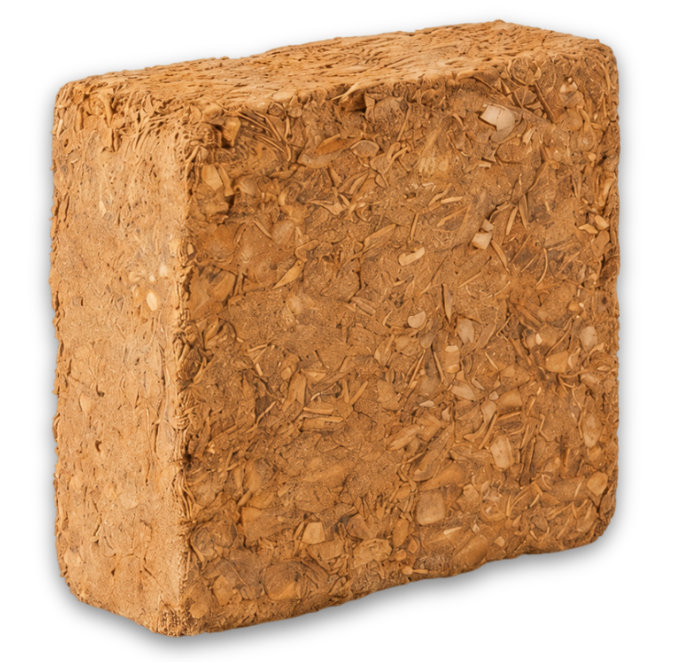
70% Coco Peat + 30% Husk Chips — Balanced Blend (Semi Washed | EC 1.0–1.5 mS/cm)
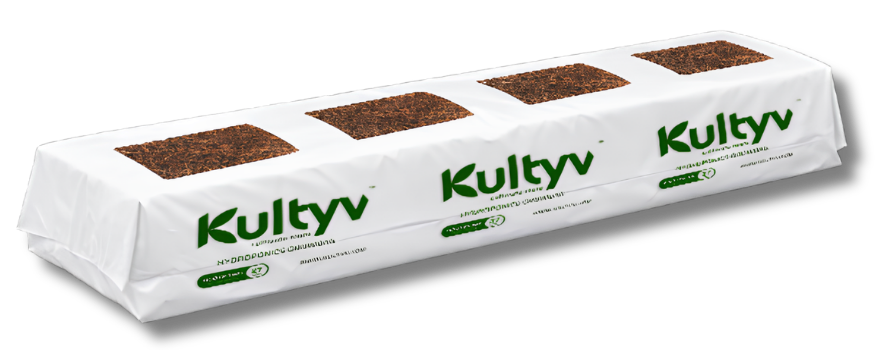
Cucumber is irrigated very frequently — the substrate must recover quickly between irrigation events. In 100% coco peat or dense generic substrates, frequent irrigation leads to persistently wet conditions and Pythium root rot — one of the most yield-destructive diseases in commercial cucumber production.
Kultyv RootPrime's 30% husk chips content creates improved drainage pathways that allow excess moisture to clear the root zone rapidly after irrigation. This prevents the saturated conditions that trigger Pythium while maintaining enough moisture for the cucumber plant's high-frequency water demand.
Commercial cucumber production involves multiple crop rotations per year. Each cycle involves repeated irrigation events that gradually compact pure coco peat substrates. By the second or third rotation in the same bag, reduced AFP compromises root zone health and limits yield potential.
Kultyv RootPrime is structurally stable across multiple crop rotations. The husk chips component maintains the substrate's open, porous structure even after repeated wet-dry irrigation cycles — ensuring consistent AFP and drainage performance from the first rotation to the last.
Cucumber growers running high-frequency irrigation programs need to manage EC precisely. Generic coco peat blocks with variable starting EC make it difficult to establish a consistent baseline — leading to EC fluctuations that cause uneven fruit size and quality.
Kultyv RootPrime delivers consistent EC at 1.0–1.5 mS/cm (semi-washed grade) on every batch. This predictable starting point simplifies the grower's EC management program — making it easier to maintain target EC ranges throughout the crop cycle.