
Balanced moisture and aeration. Formulated for the long fruiting season and high-yield demands of commercial colour capsicum production.
Capsicum — particularly coloured varieties — is one of the most commercially significant crops in Indian protected cultivation. With strong domestic demand in urban markets and growing export potential to the Middle East and Southeast Asia, capsicum is a staple crop for commercial polyhouse farmers across India.
Hydroponic growbag farming using coco peat substrate has become the dominant system for commercial capsicum production in India. It offers year-round production, precise nutrient control, and significantly higher yields per square metre compared to traditional soil-based cultivation.
Capsicum has an 8–10 month crop cycle in a single polyhouse setup. The substrate must support consistent root zone conditions over this long production period — making substrate quality and consistency a critical business decision.
Maharashtra (Nashik, Pune, Sangli), Gujarat — major commercial polyhouse capsicum hubs
System: Drip irrigation growbag | Crop cycle: 8–10 months | Year-round production
Karnataka, Andhra Pradesh, Rajasthan, Haryana — growing polyhouse adoption for colour capsicum
Varieties: Yellow, Red, Green capsicum | Market: Urban retail, hotels, export
Capsicum requires consistent moisture availability throughout its 8–10 month cycle. Any period of moisture stress during fruiting causes blossom drop, fruit cracking, and bitterness. A balanced WHC substrate maintains the moisture capsicum needs between irrigation cycles.
Capsicum develops a deep, extensive root system. Good AFP in the substrate ensures oxygen reaches deep roots throughout the crop cycle — supporting vigorous vegetative growth, flower set, and sustained fruit production over a long season.
In an 8–10 month crop cycle, substrate compaction is a real risk with 100% coco peat. A 70:30 coco to chips blend maintains its physical structure throughout the season — preventing the reduction in AFP that leads to root zone deterioration in the second half of a long crop.
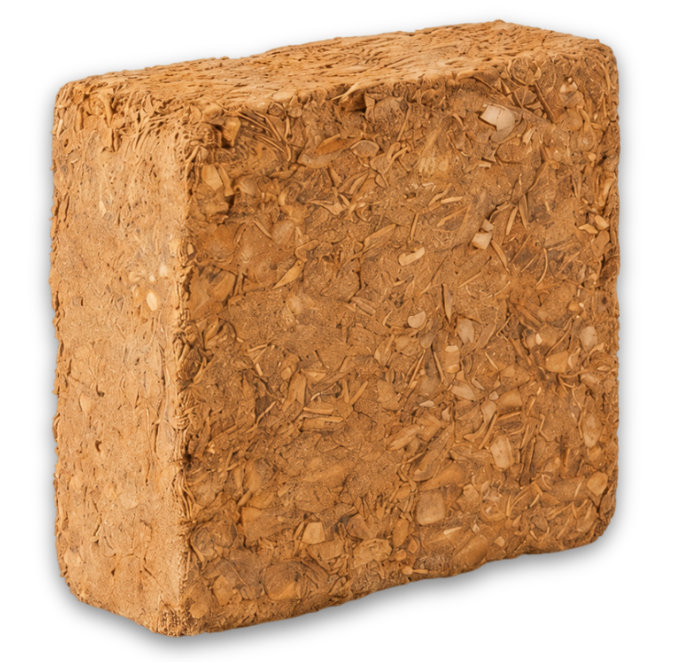
70% Coco Peat + 30% Husk Chips — Balanced Blend (Semi Washed | EC 1.0–1.5 mS/cm)
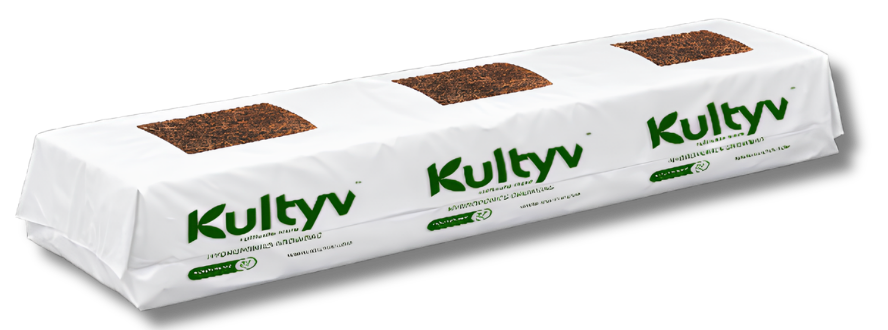
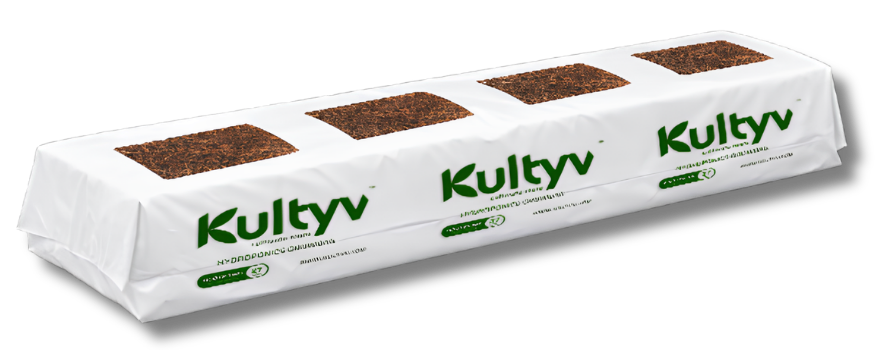
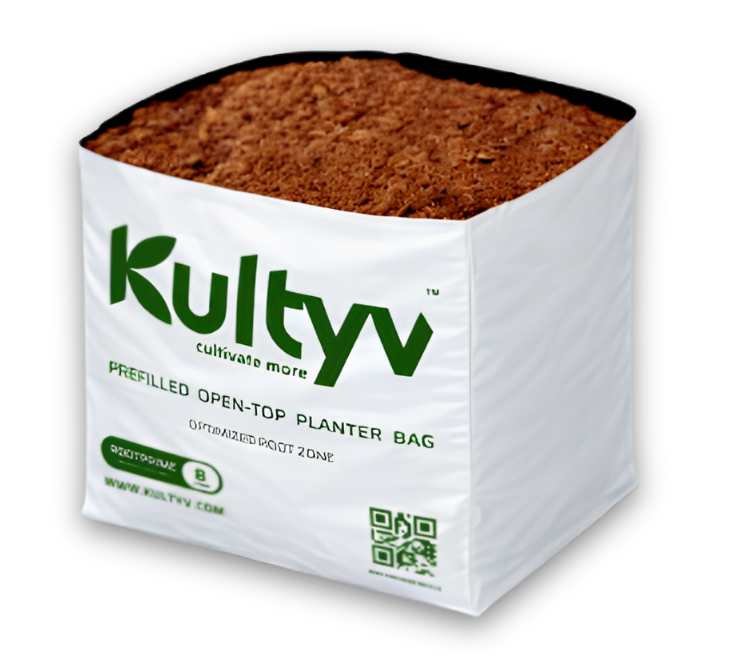
One of the most frustrating challenges for capsicum growers is sudden blossom drop during the fruiting phase. This is often caused by inconsistent moisture levels in the root zone — periods of dryness followed by overwatering stress the plant and cause it to abort developing flowers.
Kultyv RootPrime's balanced WHC (++) acts as a moisture buffer between irrigation cycles. The consistent moisture release from the substrate reduces the peaks and troughs that cause blossom drop — supporting more uniform flower retention and fruit set across the long fruiting season.
In 8–10 month capsicum crops, 100% coco peat substrates often compact over time — reducing AFP, restricting root growth, and creating localised wet zones that harbour root pathogens. Growers using generic coco peat frequently see yield decline in the second half of the season.
Kultyv RootPrime's 30% husk chips content provides structural stability that prevents compaction throughout a long crop cycle. The maintained AFP ensures roots can access oxygen in month eight as effectively as in month one — supporting consistent production right to the final harvest.
Generic or inconsistently washed coco peat delivers variable EC into the root zone — making it difficult to manage the crop's nutrient program precisely. High starting EC in the substrate interferes with the grower's ability to hit the target EC range for capsicum (1.0–2.5 mS/cm in the nutrient solution).
Kultyv RootPrime semi-washed grade starts at EC 1.0–1.5 mS/cm — a consistent, predictable baseline that allows growers to manage their nutrient solution EC with confidence. Batch testing before dispatch means every delivery performs the same.