
If you have ever looked at a coco peat specification sheet and wondered what AFP, WHC, EC and pH actually mean for your crop — this guide is for you.
No complicated science. No long explanations. Just what you need to know to choose the right substrate and grow a better crop.
What is Coco Peat Substrate?
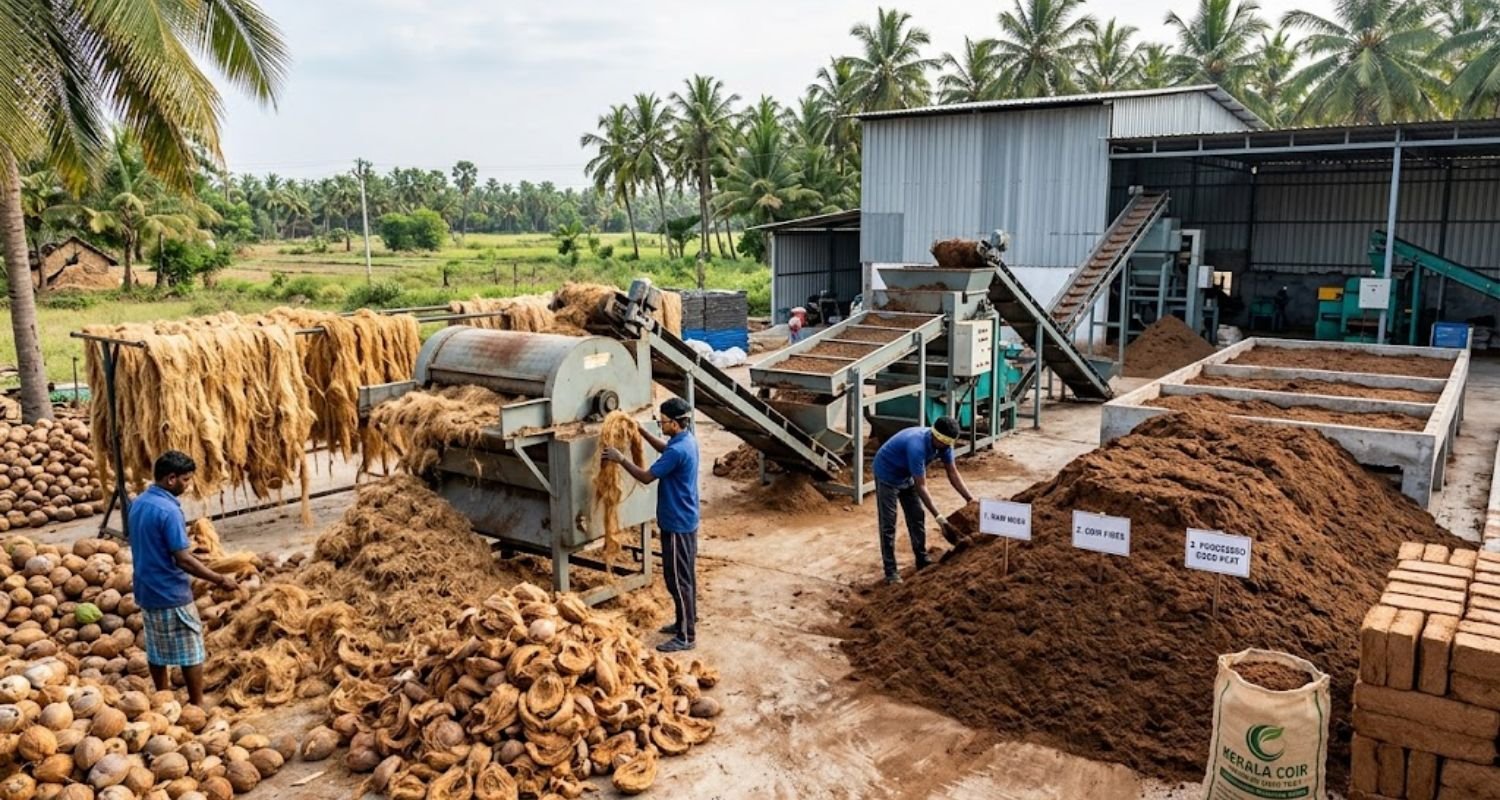
Coco peat comes from the husk of the coconut. It is the soft, fibrous material that sits between the hard shell and the outer strands. Once processed and washed, it becomes one of the best growing media available for hydroponic farming.
Coco peat does not feed your plant. Its job is simpler — and more important. It creates the right environment for your roots. The right moisture. The right drainage. The right air space. Get that right and your plant does the rest.
The 4 Numbers That Matter
1. AFP — Air-Filled Porosity
Simple version: How much air is in your substrate after watering.
After you irrigate and excess water drains away, AFP tells you how much of the remaining substrate is air space. Roots need oxygen to survive — just like we breathe.
• Too low AFP → roots suffocate → root rot
• Too high AFP → substrate dries too fast → plant stress
• Sweet spot for most crops: 10% to 30%
Blueberry needs high AFP — its roots are very sensitive to wet conditions. Strawberry can handle lower AFP — it loves consistent moisture.
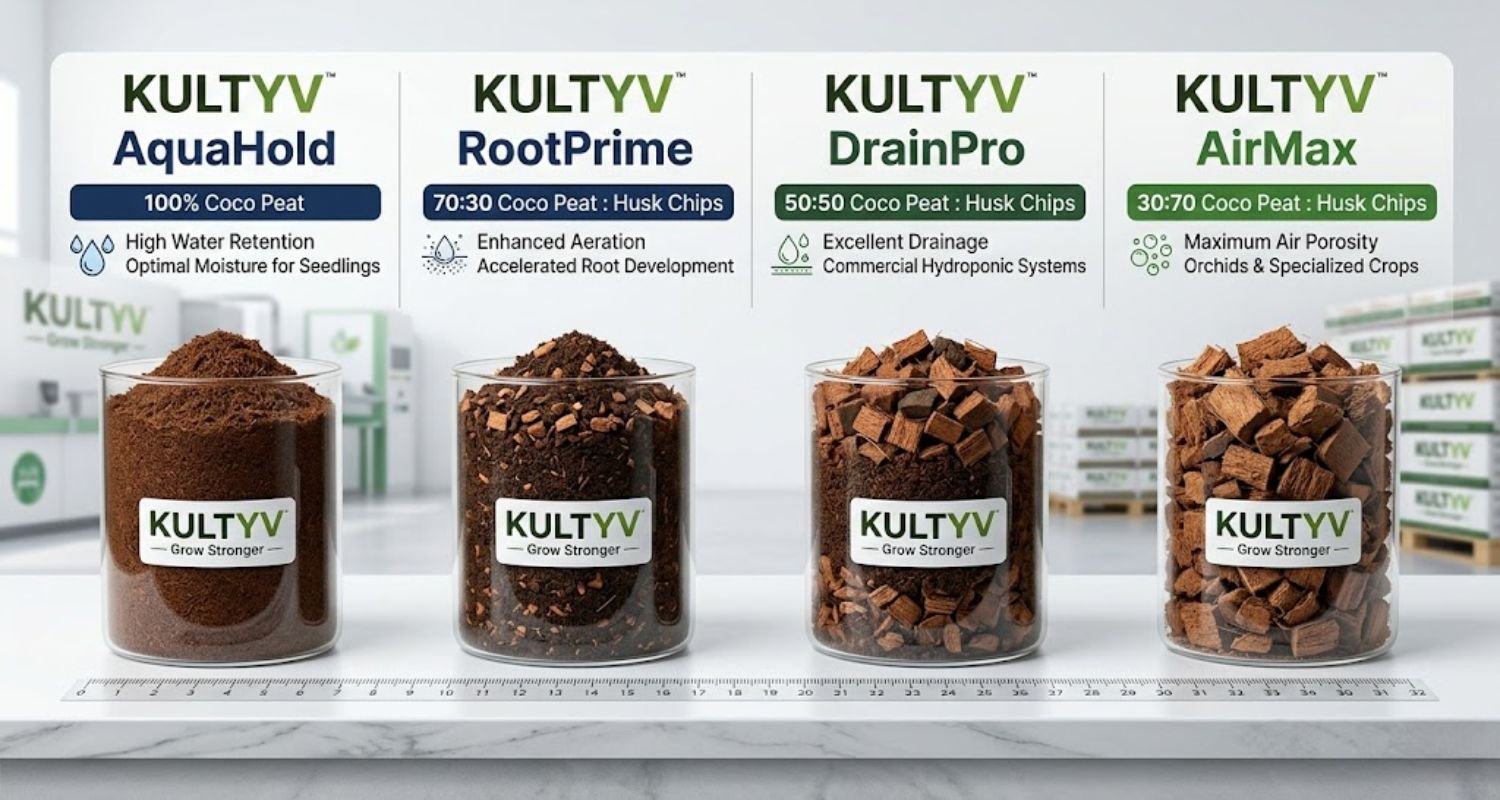
🔗 Kultyv AirMax — maximum AFP blend for blueberry — 30% coco + 70% husk chips
2. WHC — Water Holding Capacity
Simple version: How long your substrate holds moisture between waterings.
High WHC = substrate stays moist longer. Low WHC = substrate drains faster. AFP and WHC are always opposite — when one goes up, the other comes down. This is why choosing the right blend ratio matters.
• Strawberry → needs high WHC → use AquaHold (100% coco peat)
• Blueberry → needs low WHC → use AirMax (30:70 coco to chips)
• Capsicum, Cucumber, Tomato → balanced → use RootPrime (70:30)
🔗 Compare all 4 Kultyv blends — AquaHold, RootPrime, DrainPro, AirMax — full specs and crop guide
3. EC — Electrical Conductivity
Simple version: How many salts are already in your substrate.
Before you add a single drop of nutrient solution, your substrate already has salts in it from manufacturing. This is called substrate EC. If it is too high, it interferes with your crop from day one.
| Wash Grade | EC Level | Best For |
|---|---|---|
| Triple Washed | < 0.5 mS/cm | Blueberry, Strawberry, Tomato |
| Semi Washed | 1.0–1.5 mS/cm | Capsicum, Cucumber, Ginger |
| Unwashed | > 2.5 mS/cm | Not for direct hydroponic use |
Always ask your supplier for the batch EC — not just the grade name.
🔗 Kultyv triple washed grade — EC < 0.5 mS/cm guaranteed every batch — Batch tested before dispatch — every time
4. pH — Acidity Level
Simple version: How acidic or alkaline your substrate is.
pH affects which nutrients your plant can absorb. Even if the nutrients are in your water, a wrong pH locks them out.
• Most crops: target pH 5.5 to 6.5
• Blueberry: target pH 4.5 to 5.5 (more acidic — adjust with pH-down solution)
Always check pH after rehydrating your substrate — before you plant. Your water quality affects final substrate pH.
🔗 Free EC & pH Suggester Tool — Enter your crop and growth stage — get your EC and pH targets
Coco Peat vs Other Substrates — Quick Comparison
| Substrate | WHC | AFP | Best For |
|---|---|---|---|
| Coco Peat 100% | Very High | Low | Strawberry, Nursery |
| Coco + Chips 70:30 | High | Moderate | Vegetables |
| Coco + Chips 30:70 | Moderate | High | Blueberry |
| Rockwool | High | Low | Propagation, NFT |
| Perlite | Very Low | Very High | Drainage only |
| Soil | Variable | Variable | Not for hydroponics |
For Indian commercial growers, coco peat wins — it is local, affordable, renewable, and adaptable to almost any crop when blended correctly.
The Coco to Chips Ratio — Which Blend for Which Crop?
Adding husk chips to coco peat increases drainage and airflow. The more chips, the more air space — but less moisture retention.
| Kultyv Blend | Ratio | Best Crops |
|---|---|---|
| AquaHold | 100% Coco | Strawberry, Nursery |
| RootPrime | 70:30 | Capsicum, Cucumber, Tomato, Ginger, Turmeric |
| DrainPro | 50:50 | Raspberry, Blackberry |
| AirMax | 30:70 | Blueberry, Long-term crops |
🔗 Not sure which blend? Try the Coco to Chips Ratio Formulator — Free — Enter your crop, climate zone and growing method — get your ideal ratio
3 Mistakes Farmers Make With Substrate
Mistake 1 — Using generic unwashed coco peat
High EC from day one stresses your crop before it even starts. Always check EC before planting. Use washed grade (EC < 0.5 mS/cm) for sensitive crops.
Mistake 2 — Using the same substrate for every crop
100% coco peat is great for strawberry. It will cause root rot in blueberry. Match your blend to your crop — not the other way around.
Mistake 3 — Not checking pH after rehydration
Your water quality affects substrate pH. Always measure after rehydrating — before planting. A wrong pH locks out nutrients even when they are present in your solution.
The Bottom Line
| Parameter | What It Means | Target |
|---|---|---|
| AFP | Air in substrate after watering | 10–30% (varies by crop) |
| WHC | Moisture held between waterings | Match to your crop |
| EC | Salt level in substrate | < 0.5 mS/cm (washed grade) |
| pH | Acidity of substrate | 5.5–6.5 (4.5–5.5 for blueberry) |
Choosing the right substrate is not complicated once you understand these four numbers. The right blend, the right wash grade, and the right pH setup — and your roots will do the rest.
Ready to Choose the Right Substrate for Your Crop?
Talk to our team — we will recommend the right Kultyv blend for your specific crop and farm. Free of charge.